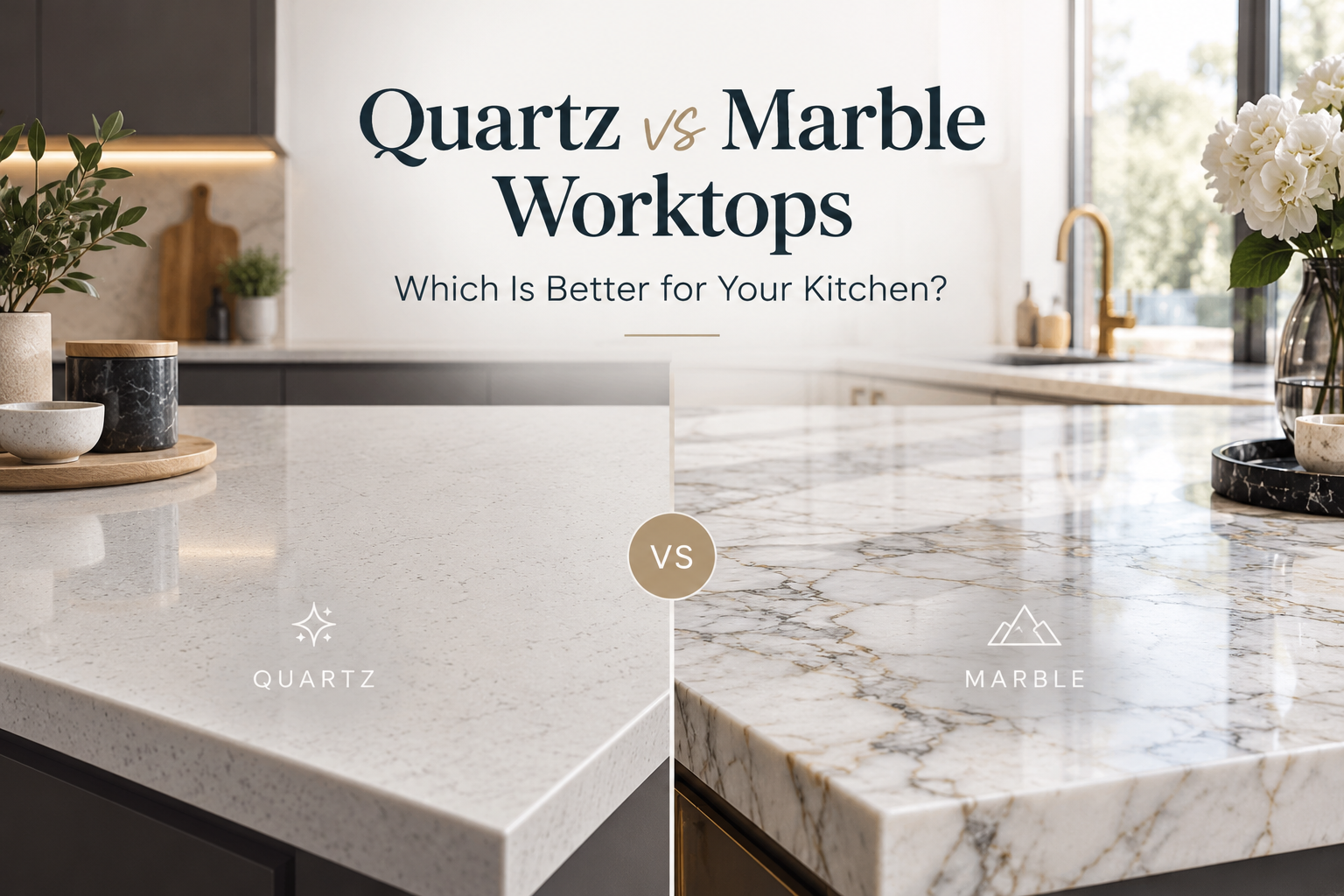
Choosing a kitchen worktop is one of the biggest decisions in any renovation. It is the surface you prepare food on every day, the first thing guests notice, and something you will live with for many years.
Two materials come up again and again: quartz and marble. Both look stunning. Both add real value to a kitchen. But they behave very differently once they are installed and in daily use.
The short answer: for most busy family kitchens, quartz is the more practical choice. It is harder, does not stain, and needs almost no maintenance. Marble suits homeowners who love natural stone, want a one-of-a-kind look, and are happy to care for a surface that develops character over time.
Below, we compare the two side by side so you can decide which is right for your home.
What is the difference between quartz and marble?
What is a quartz worktop?
Quartz worktops are engineered stone. They are made from around 90–93% natural crushed quartz, one of the hardest minerals on earth, bound together with resins and pigments. The mix is pressed into solid slabs under high pressure.
Because quartz is manufactured, every slab is consistent in colour and pattern. It also comes in a huge range of finishes, from pure whites and deep blacks to realistic marble-effect designs with soft veining.
What is a marble worktop?
Marble is a 100% natural stone, formed over millions of years as limestone is transformed by heat and pressure deep underground. Its famous veining is created by minerals running through the stone.
No two marble slabs are ever the same. That uniqueness is a big part of its appeal: a marble worktop is a genuine piece of nature in your kitchen. Popular types include Carrara, Calacatta and Statuario.
Quartz vs marble: head-to-head
1. Durability and scratch resistance
Quartz is one of the toughest worktop materials available. With a hardness of around 7 on the Mohs scale, it resists scratches, chips and everyday knocks extremely well.
Marble is a softer stone. It can scratch or chip if heavy pans are dropped or knives are used directly on the surface. Many marble owners accept small marks as part of the stone’s charm, but if you want a surface that stays flawless, quartz wins.
Winner: Quartz
2. Stain resistance
This is the biggest practical difference between the two. Quartz is non-porous, so liquids sit on the surface and simply wipe away. Red wine, coffee, curry and oil will not soak in.
Marble is porous. If spills are left too long, they can soak into the stone and leave a mark. Acidic foods such as lemon juice, tomato sauce and vinegar can also etch marble, leaving dull spots on polished surfaces.
Winner: Quartz
3. Heat resistance
Marble handles heat well, which is why bakers have long loved it for rolling pastry. It stays naturally cool and copes with warm dishes.
Quartz is heat resistant, but the resin in it can be damaged by very high, direct heat. The simple rule: always use a trivet or pan stand for pans straight off the hob or out of the oven.
Winner: Marble
4. Maintenance
Quartz is close to maintenance-free. It never needs sealing. A wipe with warm soapy water and a soft cloth keeps it looking new.
Marble needs more attention. It should be sealed regularly, spills should be wiped up quickly, and you should only use pH-neutral cleaners. Harsh or acidic products can damage the surface.
Winner: Quartz
5. Hygiene
Because quartz is non-porous, bacteria and moisture have nowhere to hide. That makes it one of the most hygienic surfaces for food preparation.
Sealed marble is perfectly safe for kitchens, but it relies on that sealant staying in good condition.
Winner: Quartz
6. Appearance
Marble’s natural veining, depth and glow are hard to beat. Every slab is unique, and many people love the way it softens and develops a patina over the years.
Quartz offers more choice and consistency. You can pick an exact colour and finish and know your whole kitchen will match. Modern marble-effect quartz now captures the look of natural marble remarkably closely.
Winner: A draw. It depends on your taste.
Which worktop is right for your kitchen?
Choose quartz if you…
- Have a busy family kitchen with children
- Cook often and want a surface that shrugs off spills
- Want a worktop that looks the same in ten years as on day one
- Prefer easy, low-maintenance cleaning
- Want a perfectly matched colour across a large kitchen or island
Choose marble if you…
- Love the authenticity of natural stone
- Want a truly unique, statement kitchen
- Bake regularly and value a naturally cool surface
- Are happy to seal the stone and wipe up spills promptly
- Enjoy the lived-in character that marble develops over time
The best of both: marble-effect quartz
What if you love the look of marble but need the toughness of quartz? That is exactly why marble-effect quartz has become one of the most popular worktop choices in UK kitchens.
These worktops recreate the soft white backgrounds and elegant grey or gold veining of classic Carrara and Calacatta marble. Yet they keep every practical benefit of quartz: no sealing, no staining, no etching from lemon juice or wine, and excellent scratch resistance.
For many homeowners, it is the ideal compromise: the luxury look of marble, with a surface built for real family life. Explore our range of marble-effect quartz worktops to see the options.
Frequently asked questions
Is quartz better than marble for kitchen worktops?
For most kitchens, yes. Quartz is harder, non-porous and resistant to stains and acids, so it copes better with everyday cooking. Marble is the better choice if natural, unique stone matters more to you than low maintenance.
Does quartz look like marble?
Modern marble-effect quartz looks very close to real marble, with realistic veining and a polished finish. The main difference is that quartz patterns are more consistent, while every marble slab is unique.
Do quartz worktops stain?
No. Quartz is non-porous, so everyday spills such as wine, coffee and oil cannot soak in. Simply wipe them away with a damp cloth.
Can you put hot pans on quartz?
It is best not to. Quartz is heat resistant, but extreme direct heat can damage the resin. Always use a trivet or pan stand.
Does marble need sealing?
Yes. Marble is porous and should be sealed regularly to help protect it against stains. Your installer can advise on how often to reseal.
How long do quartz worktops last?
With basic care, a quality quartz worktop can last for decades while still looking like new.
The verdict
Both quartz and marble can transform a kitchen. Marble offers the timeless beauty of natural stone and a character that no two kitchens share. Quartz offers outstanding durability, stain resistance and easy care, with a design range that now includes convincing marble looks.
If you want a worktop that fits busy everyday life and still looks beautiful, quartz is the safer choice for most homes.
Ready to find your perfect worktop? Browse our quartz worktops collection or request a free estimate and our team will help you choose the right surface for your kitchen.