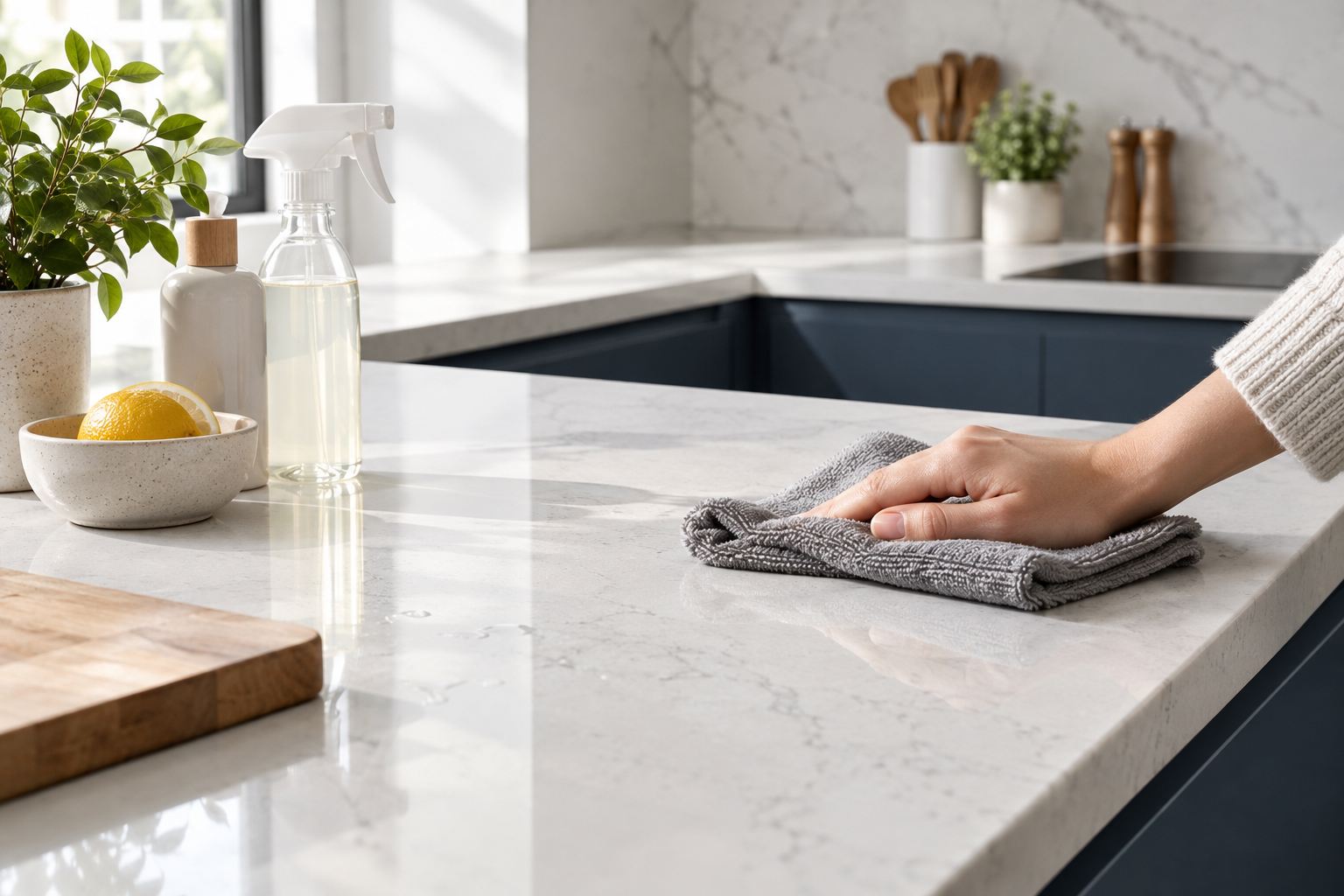
One of the biggest reasons homeowners choose quartz is how easy it is to look after. Unlike natural stone, quartz never needs sealing, and its non-porous surface stops spills from soaking in.
But easy care does not mean no care. The wrong cleaning product or a hot pan in the wrong place can still leave a mark that is hard to undo.
The good news is that keeping quartz looking brand new takes just a few minutes a day. In this guide, we cover the simple daily routine, how to deal with stubborn stains, and the do’s and don’ts that will protect your worktop for years to come.
How to clean quartz worktops every day
For everyday cleaning, you only need three things: warm water, a mild washing-up liquid and a soft cloth or non-scratch sponge.
- Clear the surface. Remove crumbs and loose debris with a dry cloth.
- Wipe with soapy water. Add a few drops of washing-up liquid to warm water and wipe the whole worktop.
- Rinse. Go over the surface again with a cloth dampened in clean water to remove any soap residue.
- Dry and buff. Finish with a dry microfibre cloth. This prevents water spots and brings back the shine.
That is it. Done once a day, or after cooking, this routine keeps quartz looking as good as the day it was fitted.
How to remove tough stains from quartz
Because quartz is non-porous, most marks sit on the surface rather than soaking in. Even so, some spills need a little extra help, especially if they have dried.
Dried food and grease
Gently lift dried-on food with a plastic scraper or an old bank card. Never use a metal knife. For grease, use a little washing-up liquid on a soft cloth, then rinse and dry.
Wine, coffee, tea and juice
Wipe these up as soon as possible. If a mark remains, make a paste of bicarbonate of soda and water, apply it with a soft cloth, leave it for a few minutes and then wipe away gently.
Ink and marker pen
Dab a cotton pad with a little isopropyl alcohol (rubbing alcohol) and work gently over the mark. Rinse with clean water and dry straight away.
Limescale and water marks
In hard-water areas, a cloth dampened with a diluted, quartz-safe cleaner will usually lift limescale. Avoid strong descalers, as they are often too acidic.
Tip: always test a new product on a small, hidden area first, and check your manufacturer’s care guidance.
Quartz worktop care: do’s and don’ts
Do
- Wipe up spills as soon as they happen
- Use warm water, mild washing-up liquid and a soft cloth
- Use chopping boards for cutting and preparing food
- Place hot pans on trivets or pan stands
- Dry the surface after cleaning to avoid water marks
- Use coasters under glasses and bottles in busy areas
Don’t
- Use bleach, oven cleaner or other harsh chemicals
- Scrub with scouring pads, wire wool or abrasive powders
- Put pans straight from the hob or oven onto the surface
- Cut directly on the worktop
- Stand or sit on the worktop, especially near edges and joints
- Leave strong cleaning products sitting on the surface
Cleaning products to avoid on quartz
Most damage to quartz worktops comes from the wrong cleaning product, not from everyday use. Keep these away from your surface:
- Bleach and chlorine-based cleaners. They can discolour the resin and dull the finish.
- Oven cleaner and drain unblocker. These are highly alkaline and can permanently damage the surface.
- Strong acids. Undiluted vinegar, limescale removers and acidic bathroom cleaners can weaken the shine over time.
- Abrasive creams and powders. They act like fine sandpaper and leave the surface looking dull.
- Solvents such as paint stripper or nail varnish remover. If one is spilled, rinse it off immediately with plenty of water.
If you are unsure about a product, stick to warm soapy water. It handles almost every everyday mess.
How to protect quartz from heat and scratches
Heat
Quartz is heat resistant, but the resin that binds it can be damaged by sudden, intense heat. A pan straight from the hob, a hot baking tray or a slow cooker left in one spot can cause discolouration or even cracking.
The fix is simple: keep a couple of trivets or heat-proof mats close to your hob and oven, and use them every time.
Scratches and chips
Quartz is one of the most scratch-resistant worktop materials, but it is not indestructible. Ceramic knives, cast-iron pans dragged across the surface, and heavy items dropped on edges can all leave a mark.
- Always use a chopping board
- Lift heavy pans and appliances rather than sliding them
- Take extra care around edges and corners, where chips are most likely
Frequently asked questions
What is the best thing to clean quartz worktops with?
Warm water, a few drops of mild washing-up liquid and a soft cloth. For extra shine, finish with a dry microfibre cloth.
Can I use bleach on quartz worktops?
No. Bleach and other chlorine-based products can discolour quartz and damage its finish. Stick to mild, pH-neutral cleaners.
Can I use antibacterial wipes or sprays on quartz?
Mild, non-bleach antibacterial products are generally fine for occasional use. Rinse the surface with clean water afterwards so no residue builds up.
Does quartz need sealing?
No. Quartz is non-porous, so it never needs sealing. This is one of its biggest advantages over natural stone.
Can you use vinegar on quartz?
It is best avoided. Vinegar is acidic and, used regularly or undiluted, can dull the surface over time.
How do I make my quartz worktop shine again?
Clean it with warm soapy water, rinse, and buff dry with a microfibre cloth. A dull look is usually caused by product residue, which this routine removes.
Keep your quartz looking new for years
Looking after quartz is refreshingly simple. A quick daily wipe with soapy water, a trivet for hot pans and a chopping board for prep will keep your worktop looking as good as the day it was installed.
Still choosing your worktop? Read our guide to quartz vs marble worktops to see how the two compare.
Ready for a worktop that is beautiful and easy to live with? Explore our quartz worktops collection or request a free estimate and our team will help you find the perfect fit for your kitchen.